BEST INTERNET FOR GAMING
Win more, play more with Exetel. Ready player (The) One?
If you're looking to “pwn noobs”, run raids or simply provide the very best life for your Sim babies, you’ll need an internet provider that’s not just a great internet provider for gaming but made for gaming. And what’s more gamer-friendly than Exetel? Delivering high-speed nbn plan built for low lag, fast downloads, and smooth online play, Exetel keeps you in the game longer.
WHY GAMERS CHOOSE EXETEL
The science of ping
Of course, speed matters; it’s the hypothetical wind beneath a gamer’s wings/ controller. But when it comes to online gaming, latency (ping) matters more than raw download speed. Latency is the time it takes for your action to travel to the game server and back to register on screen. Lower latency means faster reactions, smoother gameplay, and fewer rage-inducing lag spikes. For competitive games like Fortnite, Valorant, COD or Rocket League, even small differences can change the outcome. Download speed helps you install games faster, but ping is what wins games.


The proof’s in the pudding
Exetel consistently delivers some of the lowest latency in Australia, according to ACCC Broadband Performance Data (June 2026). During peak gaming hours (7pm–11pm), Exetel averages around 7.1ms latency.
For context, the ACCC has found that latency to Australian servers for popular online games typically averages between 15-30ms (April 2023). At 7.1ms to the test server during busy hours and 6.9ms at all hours (ACCC Broadband Performance Data April 2026), Exetel gives your connection a strong starting point before game-server distance is added.
The need for speed
Gaming doesn’t use much bandwidth on its own — most online games need less than 10 Mbps.
So why does speed matter? Because gaming often happens alongside streaming, video calls, downloads and other connected devices. A faster plan helps keep gameplay smooth when the whole household is online. Here’s what could be happening on your network during a gaming session.
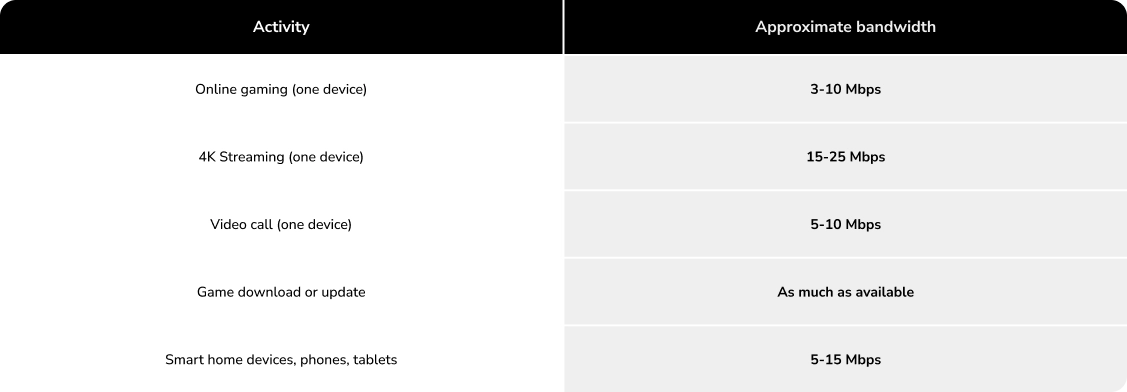 A household running all of this simultaneously can easily exceed 100 Mbps. With Exetel’s The One Plan, there’s headroom for everyone and your game doesn’t compete with your housemate’s stream for bandwidth. TechRadar reported Exetel was also the only provider in the ACCC’s testing to successfully deliver four simultaneous 4K video streams 100% of the time which is a useful indicator of how well the connection holds up under real household loads.

Routing and stability
Our everyday plans run on a seriously high-performance network — built for speed, stability and low latency where it counts.
We connect directly into all 121 nbn™ points of interconnect and maintain points of presence in every Australian state and territory, giving us tighter control over routing, capacity and congestion. So even during peak hours, things stay consistent.
Gaming isn’t just about speed — it’s about the path your data takes. We optimise routing to reduce detours and keep ping low (aiming for under 20ms where possible). That means faster response times, fewer spikes and less lag.
On top of that, our deep peering network creates more direct connections to major gaming and CDN servers across Australia and globally. Less distance, less congestion, smoother gameplay.
Robust peering
Exetel utilises extensive peering network to create more direct connections to major gaming and CDN servers across Australia, Asia, USA and Europe, helping reduce latency and support faster, more stable gameplay where milliseconds matter most.
One price and no hidden costs
What you see is what you get. No surprise fees, no sneaky add-ons -- just reliable gaming broadband at a fair price.
We think our speeds are pretty radical, but if you need to jump to Warp Speed (literally), you can, for just 1 additional dollar a day. Extra flexibility, extra speed for when you especially (get it?) need it.
LEVEL UP YOUR CONNECTION: FREE* FTTP UPGRADES
Fibre is queen
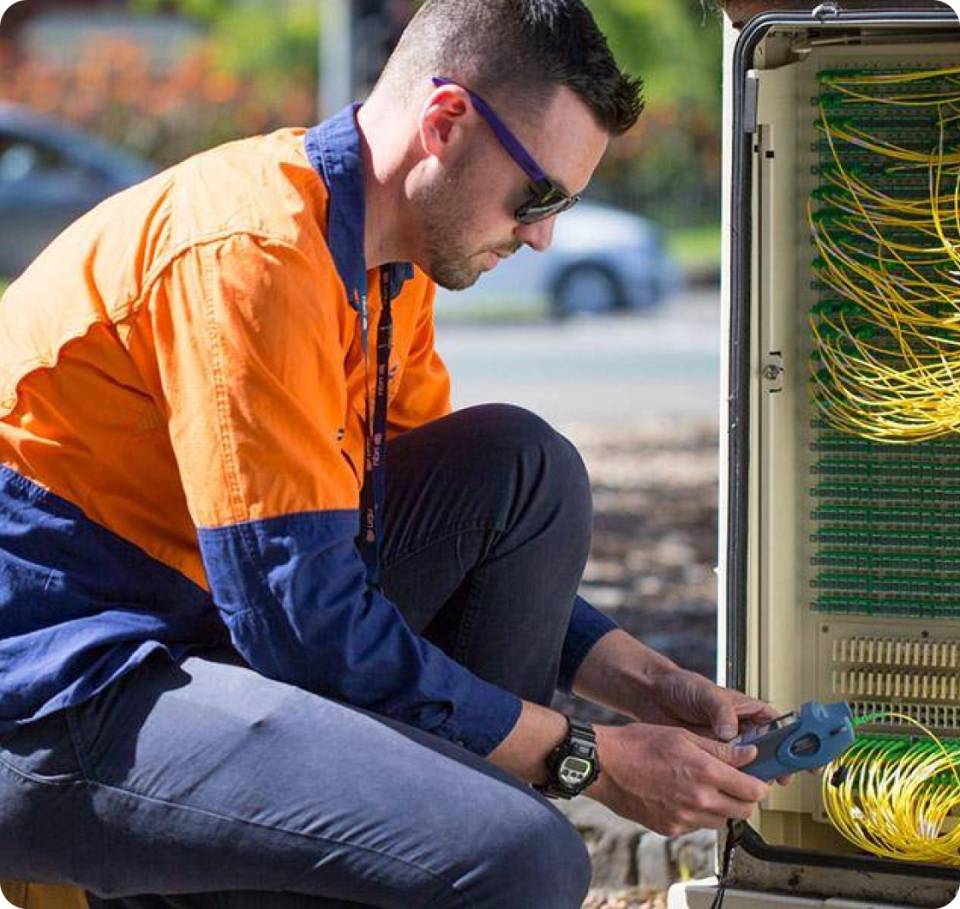
For gaming, not all connections are equal. Fibre to the Premises (FTTP) and Hybrid Fibre Coaxial (HFC) offer the best performance, lower latency, higher stability, and fewer dropouts.
If you’re currently on FTTN or FTTC, you may be eligible for a free* upgrade to FTTP when you switch to an eligible high-speed Exetel plan. What’s so good about this upgrade? Well, if you like to game with minimal interruptions, then you should be taking advantage of this free* upgrade.
*Free standard fibre upgrade only. See T&Cs for more information.
Pro tips for optimising your gaming setup
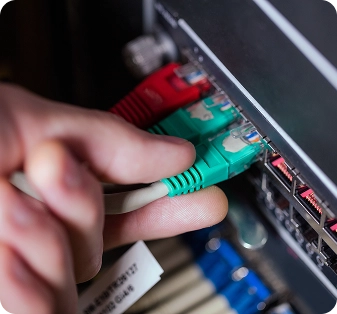
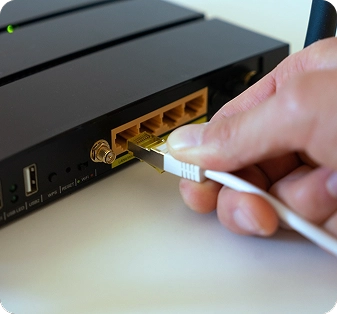
A wired Ethernet connection is faster and more reliable than Wi-Fi for online gaming. It reduces latency, jitter and interference, helping deliver a more stable connection. Plug your PC or console directly into your modem using a Cat 5e or higher Ethernet cable whenever possible. If running a cable isn’t practical, use a mesh Wi-Fi system and connect to the 5GHz band for better performance.
Choose an Australian game server to reduce ping. Shorter distances mean lower latency, and most multiplayer games let you select a server region in settings. When available, use an Australian server for the best experience. The ACCC found that gamers on fixed-line nbn typically see 15–30ms latency to Australian servers, while overseas servers can exceed 100ms (April 2023).

Fixed-line nbn delivers significantly lower and more consistent latency than 5G or mobile broadband. 5G and mobile broadband can deliver strong download speeds, but latency is inconsistent. Fixed wireless NBN averages around 43-45ms latency, significantly higher than the 7ms Exetel records on fixed-line connections (ACCC Broadband Performance Data June 2026). For competitive gaming, a fixed-line nbn remains a clear winner.

Your modem plays an important role in gaming performance. Look for Quality of Service (QoS) features that prioritise gaming traffic when multiple devices are online. Smart Queue Management (SQM) can also help reduce bufferbloat, keeping latency consistent when other are streaming or downloading. Keep your modem updated and well positioned. Firmware updates improve performance and stability, while Wi-Fi 6 or Wi-Fi 7 can better manage devices and network traffic.
Have you met The One?
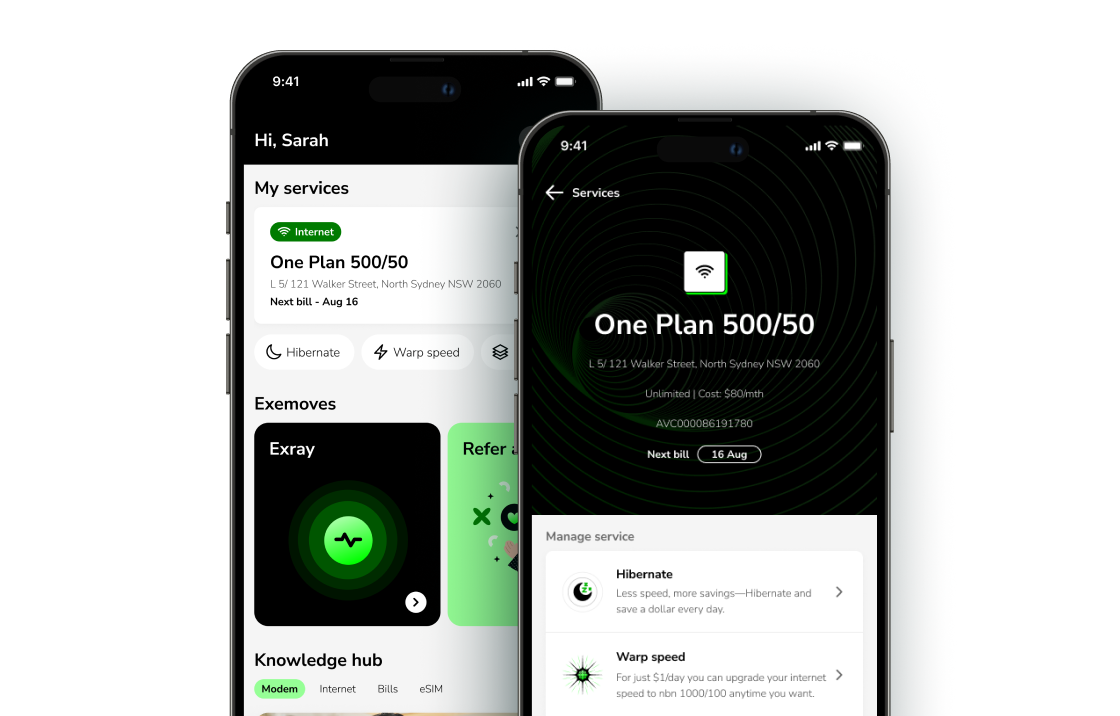
Whether you’re working from home or gaming, Exetel's nbn One Plan, has you covered.
FAQs
What is a good internet speed for gaming?
What is the difference between latency and download speed?
Is 5G home internet good for gaming?
How much internet data do I need for gaming?
How can I improve my internet connection for gaming?
Is satellite internet (like Starlink) good for gaming?
Is a wired or wireless connection better for gaming?
What is bufferbloat and how does it affect online gaming?
What is an nbn Point of Interconnect and why does it matter for gaming?
Does Exetel's network infrastructure give gamers an advantage?
Related articles


© Copyright 2026 Exetel Pty Ltd. All rights reserved.