NBN 50 VS NBN 500: IS YOUR INTERNET HOLDING YOU BACK?
Thinking of ditching your 50 Mbps nbn plan? Let’s break it down.
A smarter world needs a smarter plan
For years, the go-to plan for the average Aussie household has been the tried-and-true nbn 50. And to be fair, it’s done the job for yonks. But these days, the old “suits 1–2 people” label doesn’t quite cut the mustard. The internet isn’t just for computers anymore.
Now everything’s “smart” — phones, TVs, fridges, lights… even the bin. And that nbn 50 plan you’re rocking? It’s going to start feeling the pinch.
So, the real question isn’t will this plan suit a 1–2 person household? But can it handle all your smart stuff, at once?
What is an nbn 50 plan?
An nbn 50 plan has long been one of the most common speed tiers for Australian households. That said, its popularity hasn’t always been a pure choice.
For many customers on copper connection types like FTTN and some FTTC services, 50 Mbps has historically been the fastest practical speed available. So yes, it’s common, but because it was the next best option once upon a time.

What can you do on an nbn 50 plan?
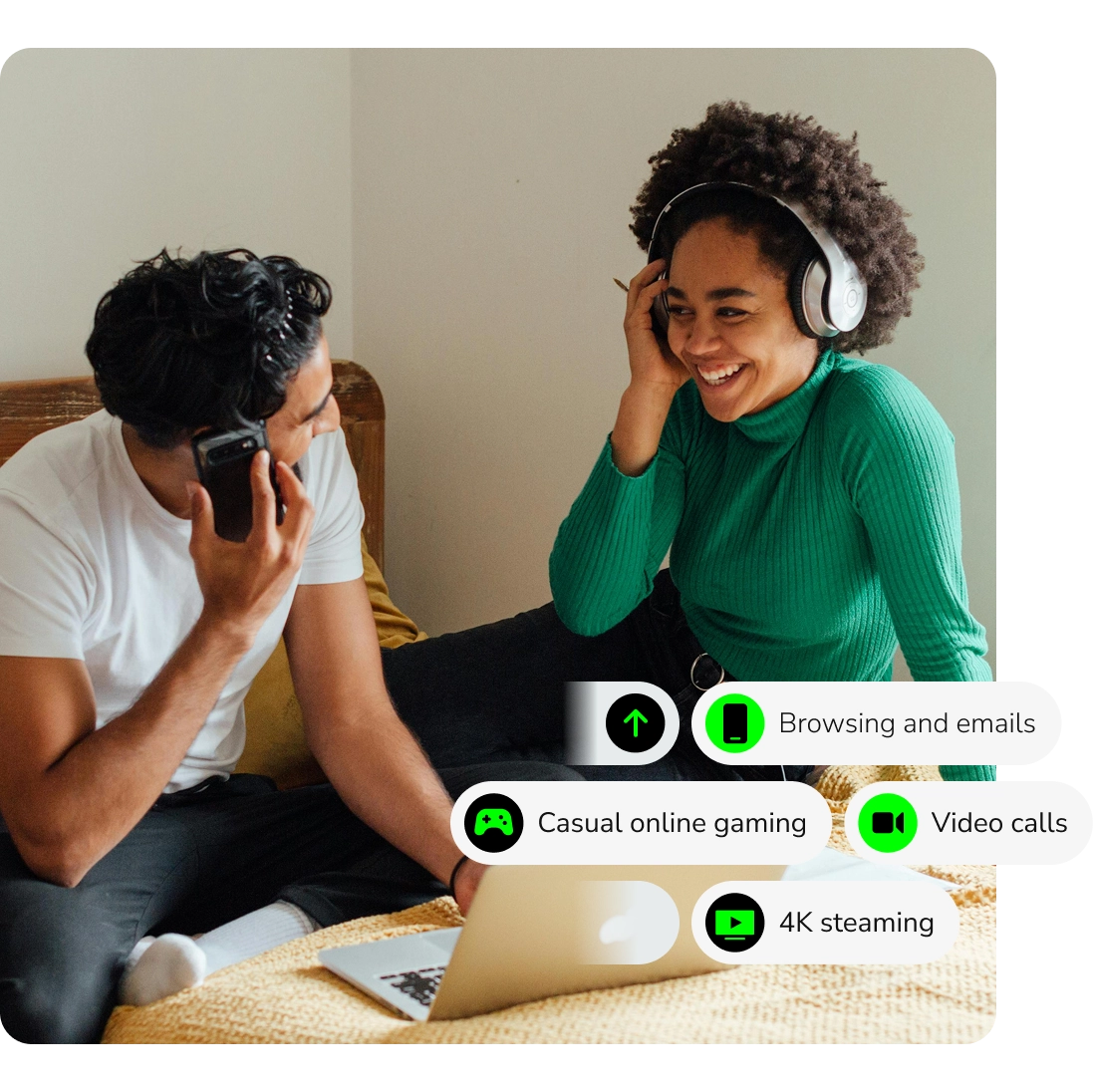
An nbn 50 connection is fine for:
4K streaming on one or two devices
Browsing, emails, and social scrolling
Video calls for work or study
Casual online gaming
A 10GB download is roughly ~25-35 minutes*.
* Real world results may vary based on the nbn tech installed at your home and the devices you use.
How do I know an nbn 50 plan isn’t right for me?
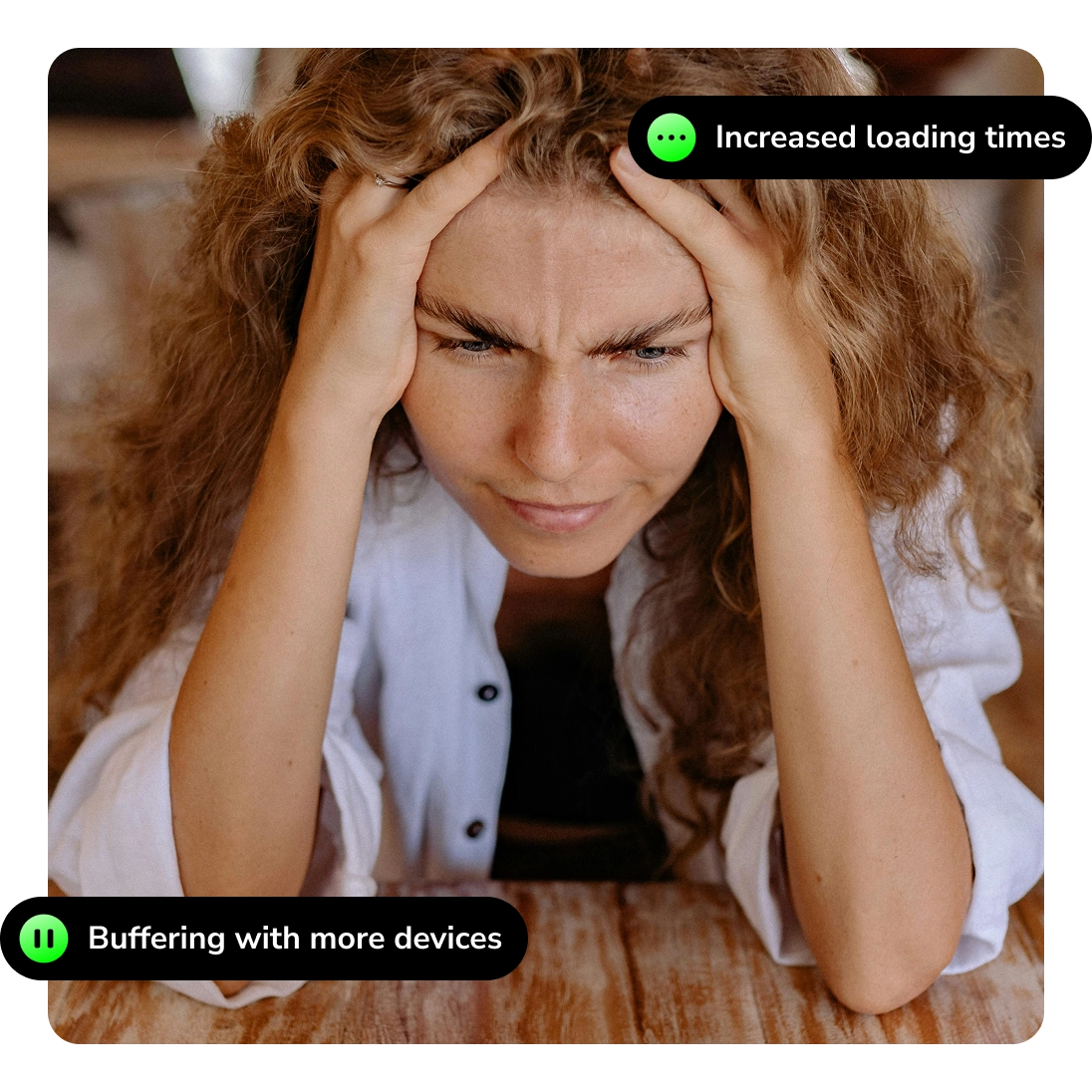
If your internet buffers when multiple devices are active, slows down the moment someone starts streaming or gaming, or feels “fine” until two things happen at one, nbn 50 may be stretching its limits.
That doesn’t mean nbn 50 is slow. It means when your household behaves like a modern home, there’s no capacity left.
nbn 50 vs nbn 500: what’s the big difference?
The short answer? Speed, breathing room, and sanity. And the price? Not that different!
The long answer? nbn 500 gives you far more capacity by up to 10x the speed of an nbn 50 plan, so the internet doesn’t fall apart when real life overlaps.
What can you do with nbn 50 vs nbn 500?
If your home has more than a couple of connected devices, nbn 500 just makes life easier.
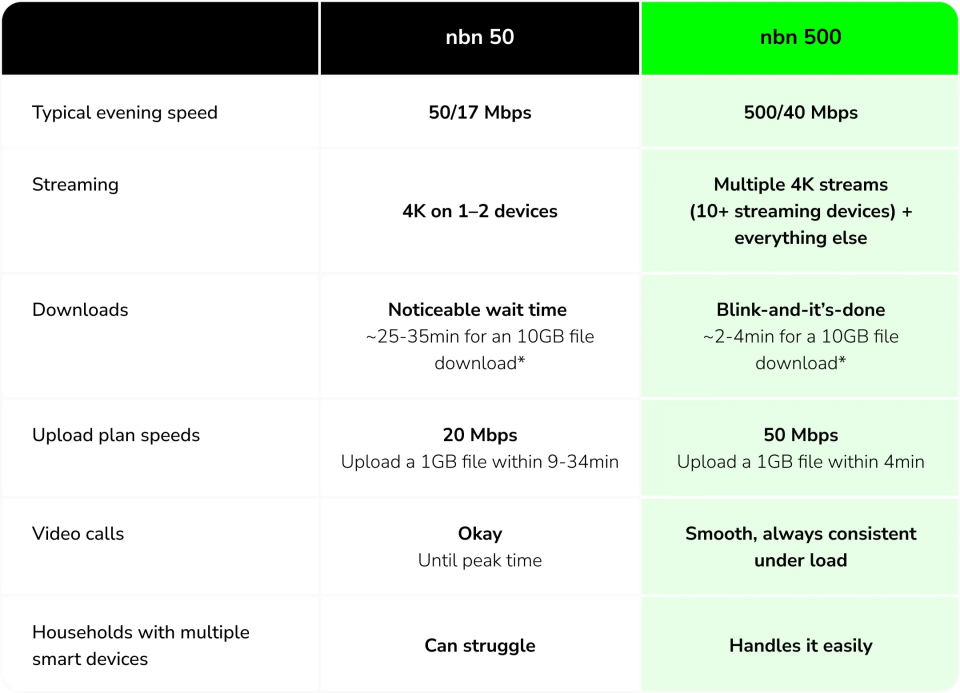 * Real-world results may vary with Wi-Fi, router quality, home setup and server speeds.
Why upgrade to nbn 500?
If you’re on FTTP or HFC and still using an nbn 50 plan, here’s the good news: your connection is capable of much more.
Better peak-time performance, so your internet stays reliable when everyone jumps online after tea.
Plenty of speed to handle WFH calls, gamers, streamers and a growing mix of smart home devices.
Supports more devices, better streaming and cloud apps, even when the whole household is online.
The average fixed-line nbn 50 plan costs around $85 a month¹. Some providers run short-term promos, but watch out when they end.
Turn that upgrade into a long-term win
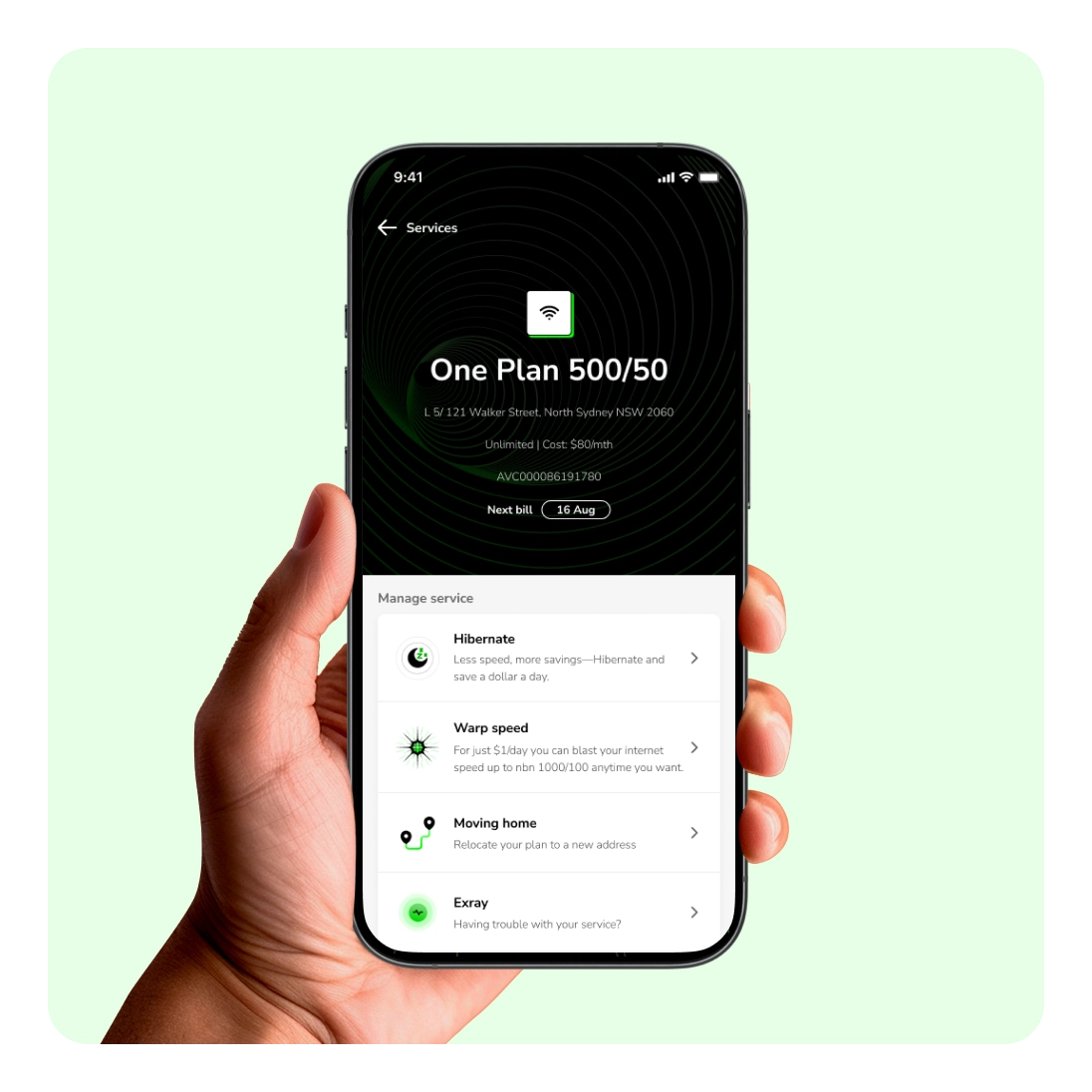
So, if you’re considering an upgrade and have read the above thinking, “Yeah, that sounds like me,” don’t fall into the promo-price trap. Exetel’s One Plan nbn 500 (TES: 500/45 Mbps) is $80 per month, ongoing. One plan. One price.
It removes the paradox of choice many people face when trying to make sense of a vast, exhausting menu of speed tiers, fine print and promotional pricing that creeps up after a limited time. Instead, it’s a curated option we’d recommend for most households, offering consistent performance, reliability and straightforward pricing.
FTTP upgrade: time to ditch nbn 50
Still rocking with FTTN or FTTC? You might be eligible for nbn’s Fibre to the Premises (FTTP) upgrade, which opens the door to faster plans like nbn 500. Why upgrade to FTTP?
Fibre-to-the-Premises (FTTP) delivers data via fibre-optic cables straight to your home, rather than relying on ageing copper. That means faster speeds, lower latency and fewer dropouts, even when demand is high.
Unlike copper-based connections, fibre isn’t affected by distance, weather or electrical interference. Because the fibre line runs directly into your home, performance stays stable, especially during peak hours.
Upgrading to fibre is a long-term infrastructure upgrade. It future-proofs your connection as your internet needs grow and can make your home more appealing to buyers or renters who expect fast, reliable internet as standard.
nbn 50 vs nbn 500
Find the answers to frequently asked questions here
Is nbn 50 (50/20 Mbps) enough for 1-3 people?
Isn’t the nbn 50 Mbps plan enough to stream Netflix?
Isn’t nbn 50 enough if I don’t game or download huge files?
nbn 50 or nbn 500 doesn’t matter. Isn’t it most likely my Wi-Fi?
Do upload speeds matter for nbn 50?
How can my home be considered a busy household if I live alone?
I’m on FTTC/FTTN, isn’t the nbn 50 plan my only option?
Isn’t nbn 500 an overkill?
References
1. Finder. (2024). Compare NBN 50 plans in Australia
2. Finder. (2024). Compare NBN 50 plans in Australia
Exetel’s One Plan keeps nbn simple
One plan, one price, no speed tiers to second-guess. For $80 a month you get fast, reliable nbn 500 plan (TES: 500/45 Mbps) that’s quick enough for streaming, gaming and all your devices without promo gimmicks or complicated upgrades.

Related articles




© Copyright 2026 Exetel Pty Ltd. All rights reserved.